

Setup
The setup is something that you, the referee, can control. After ‘set’ is called, you are no longer in control and whatever happens will happen and your only option is to react.
A solid setup will position you on the best possible foundation for positive outcomes.
Try and create a process, or a checklist, that you follow every time. Look at the same things in the same order and make mental notes of what you see. Depending on the level, you can try and get ahead of issues by having them correct, or if that isn’t appropriate, you’ll have a better idea of what might come next.
The sections on this page can help you construct one.
Brake foot
Section titled “Brake foot”As the front rows approach the mark, look that the hookers are starting with a brake foot extended.
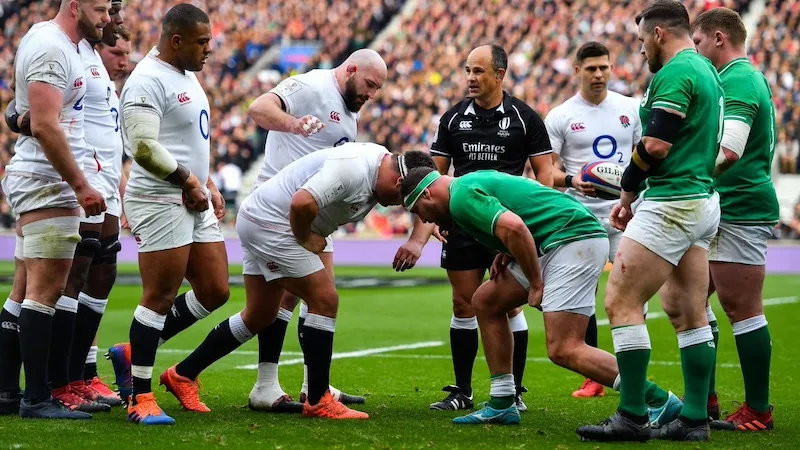
Read up on the March 2024 clarification where the brake foot concept was expanded and refined. The one of the drivers behind the brake foot was to prevent axial loading.
Shoulders
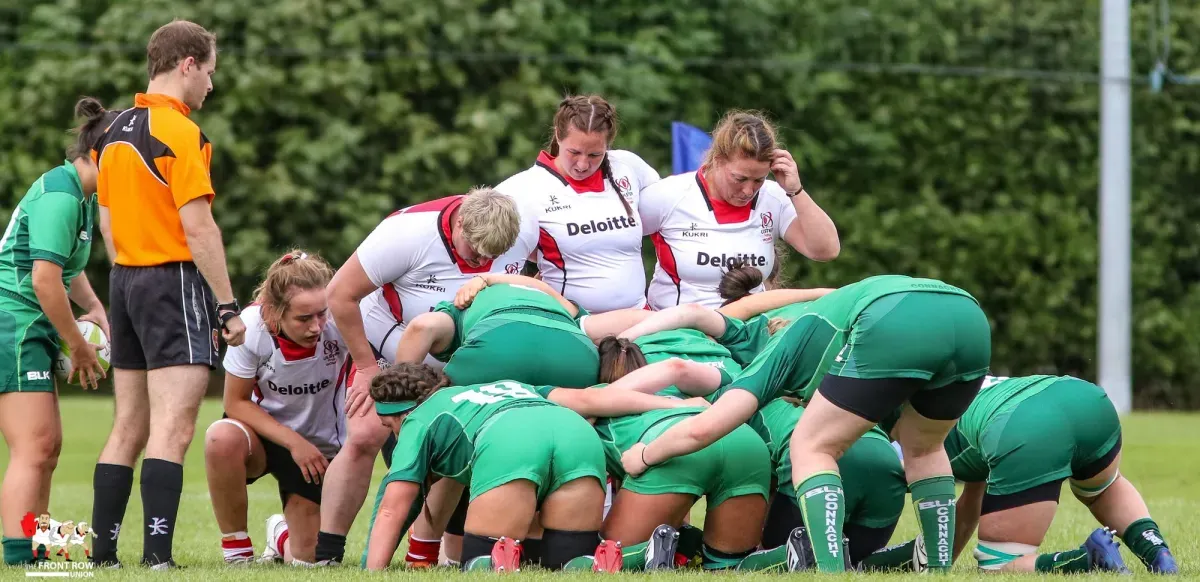
Section titled “Shoulders”Prop’s and hooker’s shoulders should be visible across the line as the props bind onto the hooker. A prop will hide the shoulder, knowingly or unknowingly, in search of a tighter bind with the hooker. What this accomplishes is two fold:
-
It does give a tight bind with the hooker, minimizing space between the prop and hooker. However, it creates conditions, which, ironically, introduces insecurity and instability overall.
- This position relies on the rotational strength of the prop to keep themselves straight. It’s a risk/reward proposition: I sacrifice the initial straightened line up for the benefit below.
- Despite the closeness of the initial bind between prop and hooker, there must necessarily come a point where that proximity is violated in order to fit the second row head between their thighs.
-
Hiding the right shoulder of the LH under the hooker, for instance, takes away the ability of the opposing Tight Head to push because there is not anything to push against. If the Tight Head pushes, they will go where their force takes them: into the opposing hooker making it look like the TH is not driving straight.
Six Shoulders are visible in this picture:
Shoulder hide video
Section titled “Shoulder hide video”See the below video for an example. In the first 7 seconds, you’ll see the red LH hide his shoulder underneath his hooker. In this match, this was a trend. On that scrum, you can see the signs of the white TH trying to assert himself, but not have anything there. The scrum creaks, but the red LH has the strength to hold it up. (00:00 - 00:29)
In the subsequent scrum (00:29 - 00:56), the same LH hides his shoulder, but 5m out on the offensive scrum with the referee far side, does not put the effort in to keep it up, earning the easy PK for white TH collapse after trying to push and having no where to go.
Axial loading
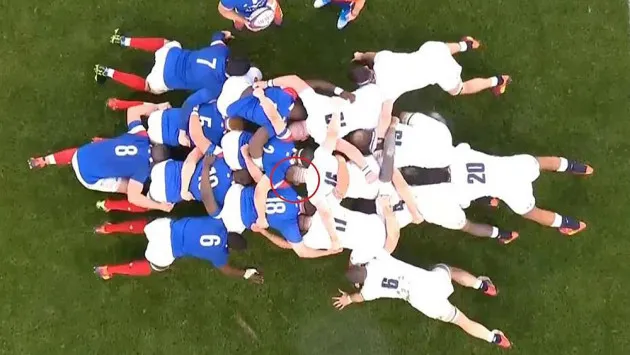
Section titled “Axial loading”Axial loading is the technique of using the head of the hooker to pre-load against the shoulder of the opposing hooker. Typically, this will be done on an angle as well.
The idea is that by placing pressure against the shoulder before coming together, it allows the hooker and loose head to isolate the opposing tight head, neutralize their impacts, and place them under increased physical strain and pressure.
A great visual of white 16 axial loading on his opposite number showing how his drive will isolate blue 18.
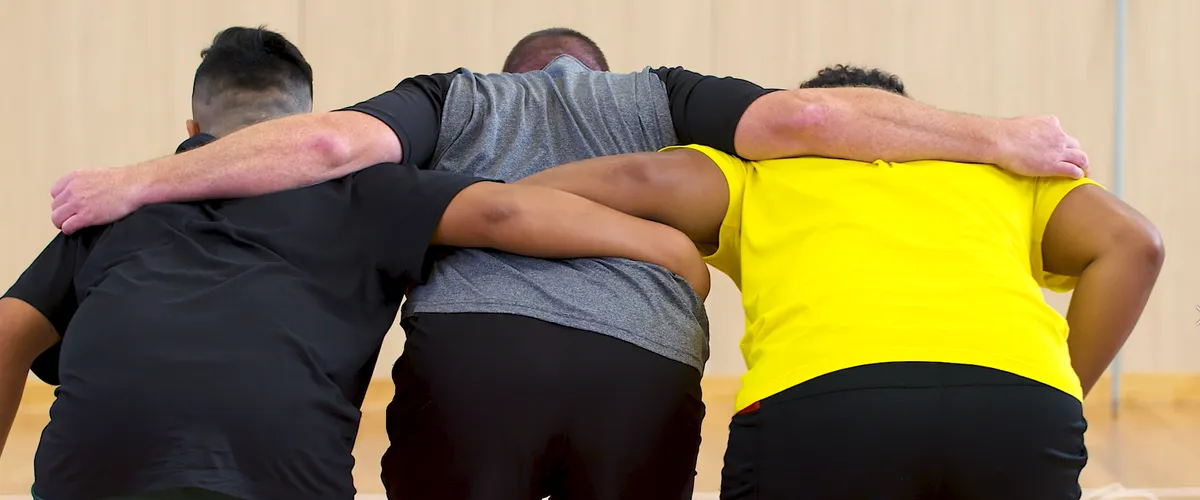
Take note of the binds that teams use before the cadence instructs them to bind onto the opposition. This can be a big tell of what might happen next.
The way that props bind on hookers will tell you a story. The “higher” and more parallel the props’ arms are across the hooker’s back, the higher the likelihood that they will be starting straight.
Bad bind by TH
Section titled “Bad bind by TH”Take a look at the green tight head in this video. At the start, you’ll notice his left hand is bound onto the hooker’s right hip. This bind is very low and points the TH’s left shoulder down and in. This instantly puts him on the angle, which is a big part of why he’s driven through, instantly splitting his scrum.
Body positions
Section titled “Body positions”The body position of props pre-engagement can also tell you a lot about what will probably happen next. The ideal body shape would be a hinge at the hips, without shoulders dropping lower than the hips, and knees in that 90-ish° range.
Over-extension at the start can signal a prop is under pressure and is scrumming to survive. It can put them into a vulnerable position if the opposition detects it or if they extend too soon. See the yellow tight head in the below video. He starts well enough pre-set, but as soon as they come together, he extends his right leg and can’t do anything to keep himself up and folds.
Over-extension can happen pre-engage as well. If you see it, that should be a trigger for you that the prop in question might be under pressure and might be a cause of problems. See the scrum shapes for more details.